-

Peter BodoTennis
NEW YORK — We get it. Tennis is a sport of individuals, and one of its most prized features is the rule that prohibits coaching during Grand Slam and ATP Tour matches.
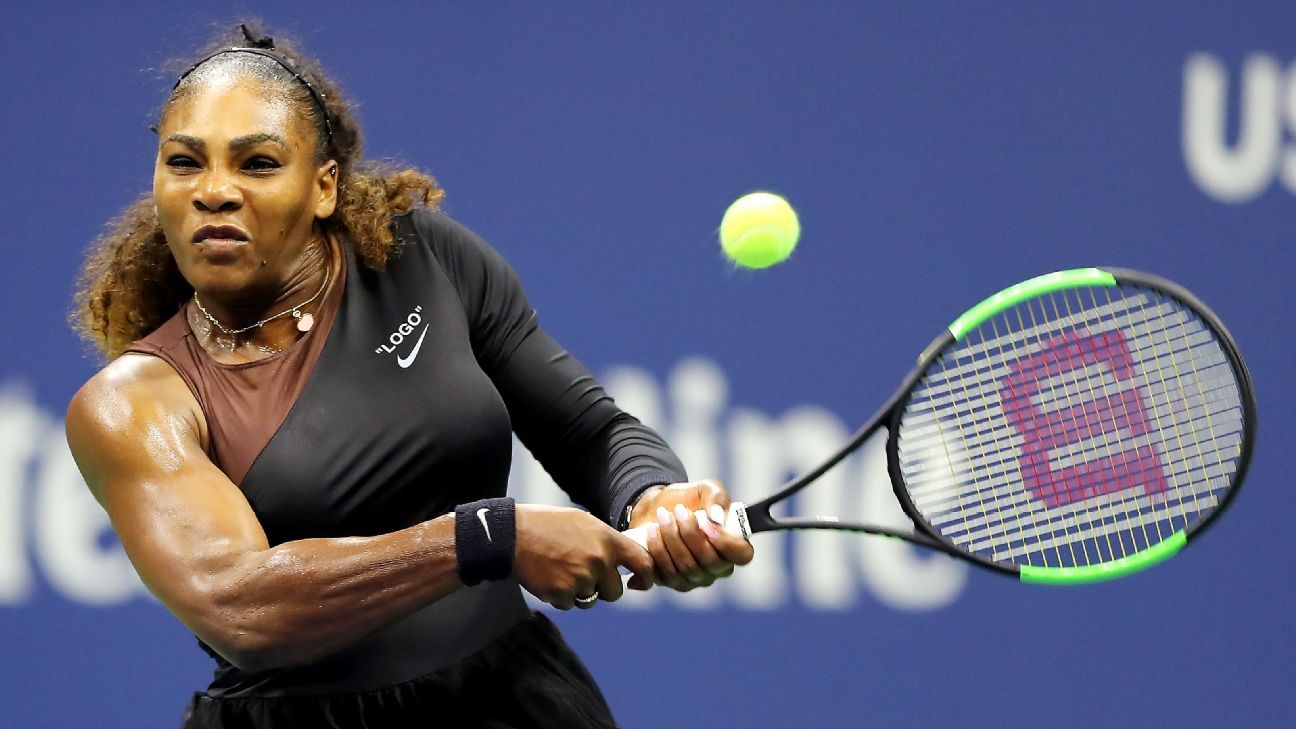
But there’s also this: The game is now played for very high stakes by individuals who have entire teams who not only support them, but are always in evidence courtside. Trying to police illicit coaching is difficult and highly subjective, an invitation to disaster. That much was evident after the outsize role a coaching violation played in Serena Williams‘ loss to Naomi Osaka on Saturday in the US Open final.
Which is why it’s time for tennis to take a good, long look at the rules governing coaching.
Section L in “Article III — Player On-Site Offense” in the Grand Slam Rulebook, begins: “Players shall not receive coaching during a match (including the warm-up). Communications of any kind, audible or visible, between a player and a coach may be construed as coaching.”
So is it coaching to yell, “Come on,” when your protege hits a winner? Is it not cool for a player to look at the box that seats his parents, coach, physio and agent and point to his leg, indicating cramps? When a coach plants his left elbow into his right palm, is it a signal that was agreed upon beforehand?
It gets difficult. It can get crazy. And, as we saw Saturday, it can also ruin a tennis match. Chair umpire Carlos Ramos — one of the elite Gold Badge umpires, meaning he is considered a highly rated official — issued a code violation warning to Serena Williams in the second game of the second set, after Ramos (and television cameras) observed Serena’s coach, Patrick Mouratoglou, making hand gestures that appeared to suggest Williams move forward, presumably to rush the net. Williams reacted to the penalty immediately, demanding an apology from Ramos and telling him “I don’t cheat.”
Such code violation warnings aren’t rare or unusual. (At least two other players received code violations for coaching in the US Open, including Dominika Cibulkova, who was also assessed a coaching violation in her third-round match.) Players usually grumble, protest their innocence and move on. And while Ramos was accusing Mouratoglou, not Williams, of cheating, the incident was the catalyst for all that followed.
Mouratoglou said he was definitely coaching in an interview with ESPN analyst Pam Shriver: “I was coaching, but I don’t think [Serena] looked at me. [Osaka’s] coach was coaching the whole time, too. Everyone is doing it, 100 percent of the time.”
The coach was guilty as charged, but the absurdity of the coaching rule — or the selective, sometimes capricious way it’s enforced — was suggested in Williams’ postmatch reaction. She claimed she was unaware of her coach’s actions — or of his admitting to it.
“I don’t know. I literally just heard that, too,” Williams said of Mouratoglou’s confession when she met with the press after the match. “I just texted Patrick, like, what is he talking about? Because we don’t have signals. We have never discussed signals. I’m trying to figure out why he would say that. I was on the far other end, so I’m not sure. I want to clarify myself what he’s talking about.”

1:45
2018 US Open champion Naomi Osaka joins the ESPN set to break down her perspective during Serena Williams’ argument with the chair umpire.
The confusion — “mess” might be a better word — highlighted the weakness in the broadly written rule. That it was Williams who suffered is ironic because she has never been a player to push the envelope with the rule to begin with; she doesn’t even avail herself of the on-court coaching allowed by the WTA at its tour-level events. Williams takes pride in her ability to navigate difficult moments without looking to see if her coach is tugging at an earlobe or strategically placing his elbow on a handrail, like an erstwhile third-base coach in Major League Baseball.
That’s more than you can say for a lot of other players.
“One thing I love about tennis is being out there,” she said. “It’s the one time I don’t want to hear anyone tell me anything. It’s my moment of peace when I’m out on the court where I don’t hear anyone. I don’t need it. I just try to problem-solve myself.”

2:37
Serena Williams talks about the coaching warning she received during the US Open final and whether she would have changed anything from the match.
The code violation was certainly unfair to Williams. The rule itself is so amorphous that it can be bent to any purpose. It needs to be changed — or scrapped altogether.
A suggestion: Perhaps the rule should call for the ejection of a coach who violates it. That would surely be a more effective punishment for a team that actively cheats. A warning is just a slap on the wrist, and usually it’s taken that way. In this case — and Williams didn’t seem to understand this — it was a slap on her coach’s wrist.
But then again, this was no ordinary occasion. This was a US Open final, the apex of Serena’s comeback to tennis since becoming a mother, in her home Grand Slam. She was also trying to equal Margaret Court’s all-time Grand Slam singles title record (24).
Given those circumstances, it’s easier to understand how Williams’ equilibrium was upset. Coaching violation? You have got to be kidding! With the kind of stuff that goes on every day on both tours? Williams’ moment on the court was shattered during what should have been a grand occasion, win or lose.
Somebody ought to get a code violation for that.